Quick answer
Scalp micropigmentation usually lasts around four to eight years before it gradually fades and may need refreshing. It is not completely permanent, although it does not wash out with shampoo. Longevity depends on factors including sun exposure, skin type, lifestyle, pigment placement and the condition being treated.
Why does scalp micropigmentation fade?
Scalp micropigmentation is a cosmetic tattoo treatment. I deposit tiny pigment dots into the upper layers of the scalp to create the visual impression of closely shaved follicles, fuller density or reduced contrast around a scar.
Because the pigment sits in living skin, the result changes gradually. Natural skin renewal, immune-system macrophage activity and lymphatic movement slowly soften and disperse some of the pigment. Ultraviolet exposure can also accelerate fading and contribute to colour changes over time.
That is why I describe SMP as semi-permanent rather than permanent in appearance. Some pigment can remain in the skin for much longer, but the crispness and depth of the original result will not stay unchanged indefinitely.
What affects how long the result lasts?
There is no identical timeline for every client. During consultation, I consider the scalp, the extent of hair loss, your normal grooming routine and how much direct sunlight the area receives.
-
Sun exposure: regular unprotected UV exposure can fade pigment more quickly.
-
Skin type: oily skin, faster cellular turnover and some medications may contribute to quicker fading.
-
Age and skin condition: mature or drier skin may hold pigment for longer, although individual results vary.
-
The treatment area: a dense scalp treatment, hairline, scar or alopecia area may age differently from another area.
-
Application quality: pigment placed too shallowly may fade quickly, while pigment placed too deeply can spread and look blurred.
Scarring alopecia can be particularly unpredictable. Scar tissue does not always retain pigment in the same way as unaffected scalp, so some clients may need a touch-up sooner than expected. You can read more about treatment considerations on my page about SMP for alopecia.
Is scalp micropigmentation permanent?
No. It is long-lasting, but I would not present it as a permanent result. The colour gradually becomes lighter and softer, usually over several years. A refresh may then restore definition without repeating the entire original process.
This is also why choosing an experienced SMP professional matters. A natural hairline and carefully controlled dot placement are important at the beginning, but they also affect how the work ages. If pigment is implanted too deeply, spreading or colour change may make later correction more difficult.
SMP does not grow hair, alter your natural hair growth or damage existing follicles. It reduces the visible contrast between hair and scalp. Clients with remaining hair commonly keep it at fine stubble length, while clients with more advanced hair loss may prefer a fully shaved look.
SMP longevity: key facts
- SMP is long-lasting, but it is not a permanent result.
- The colour gradually becomes lighter and softer, usually over several years.
- A refresh may restore definition without repeating the entire original process.
- SMP does not grow hair, alter your natural hair growth or damage existing follicles.
- It reduces the visible contrast between hair and scalp.
When might I need a touch-up?
Many people return for a re-darkening appointment after several years. Some need attention earlier, while others are happy with a softer result for longer. I assess the existing work rather than relying only on the date of the original treatment.
A touch-up may be appropriate when the dots have become noticeably lighter, the contrast between scalp and hair has increased, or a scarred area is standing out again. It is usually a maintenance treatment, not necessarily a complete restart.
For clients considering SMP for baldness, I explain how the chosen hairline, scalp coverage and future hair loss may affect maintenance. My SMP for baldness guide covers that decision in more detail.
How can I help SMP last longer?
Good aftercare protects the early result while the scalp settles. After each session, follow the specific instructions I provide. In general, keep the scalp dry, avoid shampooing, sweating, heavy exercise, hot showers, steam rooms and direct sun for the advised early period.
After the final treatment, avoid swimming pools, saunas and steam rooms for 28 days, and avoid direct sun on the scalp for 28 days. Once that period has passed, use broad-spectrum SPF 30 to 50 when the scalp is exposed. Long-term sun protection is one of the simplest ways to help preserve the pigment.
Do not pick scabs or interfere with the healing process. Colour can look darker immediately after treatment and then soften as the scalp heals. Full healing takes a few weeks, even when surface redness settles much sooner.
The number of sessions varies and is assessed at consultation.
What should I check before booking?
Ask to see healed examples of the practitioner's work, not only fresh results. Pay particular attention to the hairline, dot size, spacing and whether the work blends naturally with the client's remaining hair.
You should also discuss allergies, skin conditions, medication, previous scarring and your expectations. Active eczema, psoriasis flare-ups, scalp acne and a history of keloid scarring may mean that treatment should be delayed or avoided.
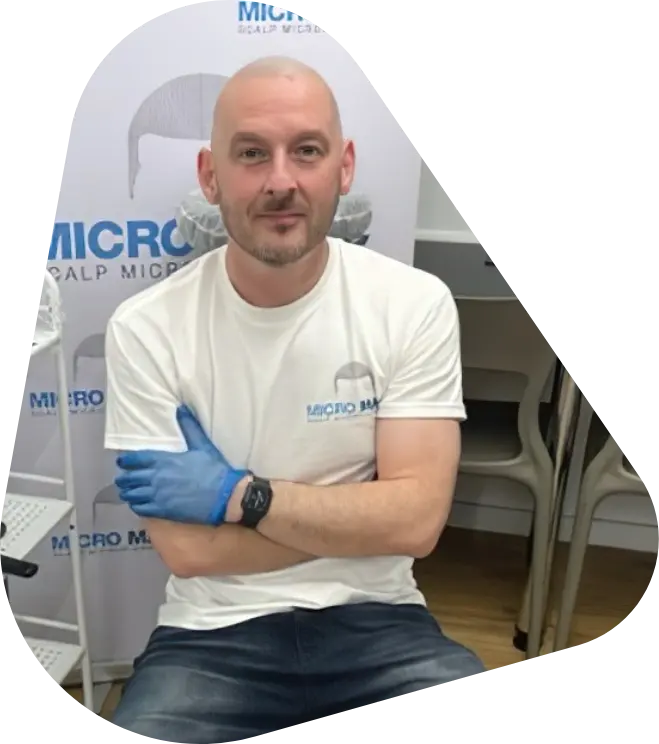
At Micro Magic SMP, Manchester, I am Stuart Buckley, owner and Head SMP Technician. I use the consultation to establish whether the treatment suits your hair loss pattern and the result you want, including whether scar coverage is relevant. You can contact Micro Magic SMP to arrange a consultation.
If you would like me to assess your scalp, you are welcome to book a consultation.
Frequently asked questions
Will scalp micropigmentation fade completely?
SMP gradually becomes lighter and softer rather than suddenly disappearing. Some pigment may remain in the skin for many years. If the remaining colour becomes unwanted or uneven, removal options can be discussed with a suitably qualified professional, although correcting poorly placed pigment may require more care.
Does shampoo make scalp micropigmentation fade?
No, normal shampoo does not simply wash SMP out because the pigment is placed into the skin. However, harsh products, frequent exfoliation, oily skin, sun exposure and natural skin turnover can contribute to gradual fading. Follow your practitioner’s washing instructions during the initial healing period.
Can I have SMP if I still have thinning hair?
Yes. SMP can be placed between existing hairs to reduce visible scalp show-through, including for some clients with thinning hair who do not want to shave. The remaining hair is usually kept at a short, consistent length so it blends with the implanted follicle effect.
Does scalp micropigmentation last as long on scars?
Scarring can retain pigment differently from unaffected scalp. Some scar tissue holds colour well, while other areas fade sooner or need additional work. I assess the area in person before discussing likely maintenance.
Can future hair loss affect the lifespan of my SMP?
Future hair loss does not make the pigment disappear, but it can change how the overall result looks. If natural hair becomes thinner around treated areas, more scalp may show or the planned hairline may need reviewing. I discuss this possibility when designing the treatment.
Can I go in the sun after scalp micropigmentation?
Direct sun should be avoided during the early healing period, including the first 28 days after the final treatment. Once healed, protect the exposed scalp with broad-spectrum SPF 30 to 50 and consider physical shade. Consistent UV protection can help slow pigment fading and colour change.
Is SMP suitable for everyone with hair loss?
No. Suitability depends on the cause and pattern of hair loss, scalp health, scarring history, medication and expectations. Active scalp conditions and a tendency to form keloids may make treatment unsuitable. A proper consultation is needed before deciding whether SMP is appropriate.
What if my SMP becomes too light but I do not want a darker result?
A refresh does not always mean making the whole scalp darker. An experienced practitioner can assess whether selective re-darkening, softening surrounding contrast or leaving the result to age further is more suitable. The aim should be a balanced appearance, not simply adding more pigment.